
- field service companies
- route-optimization strategies for HVAC service technicians
- scheduling software for peak service seasons
Outsmart the Seasons: Stop Losing Revenue in Traffic and on Paperwork
Key Takeaways
- Proactive Preparation: Seasonal field service management helps service businesses prepare for shifts in demand before margins suffer.
- Stable Operations: Optimized seasonal service scheduling keeps technician time productive and stabilizes daily workflows.
- The Real Revenue Leaks: Profit often slips away due to inefficient routing, manual dispatching, and administrative bottlenecks rather than a lack of customer demand.
- Faster Invoicing: Leading teams adapt early, maintain real-time visibility in the field, and close out work orders instantly.
- Year-Round Balance: Improving operational efficiency makes peak seasons highly profitable and slow seasons easier to navigate.
Plumbing and HVAC businesses do not just lose money when demand slows down. They also lose it when schedules are too busy, routes are too long, and office teams waste too much time searching for paperwork when the work is already done. You can experience that pressure in all seasons, when the rush is caused by cooling calls in summer or urgent heating and pipe repairs in winter.”
That is why managing seasonal scheduling for plumbing and HVAC services matters so much. It is not only about getting people on the calendar. It is about ensuring the calendar supports faster movement, better coverage, and fewer delays throughout the day.
The bigger question is how field service companies manage seasonal demand fluctuations without letting that pressure damage service quality or cash flow. Praxedo addresses that challenge by helping teams connect scheduling, field visibility, and job completion more practically.
Why Seasonal Demand Creates Revenue Leaks
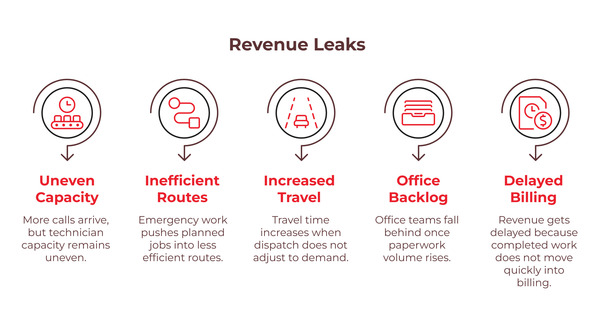
Seasonal demand is foreseeable in general terms, yet the operational pressure it generates continues to surprise many businesses. A company might be aware that summer will bring cooling calls or that winter will bring emergency work, but the same old scheduling habits remain until the pressure sets in. Search behavior gives a sense of just how sharp the curve is — queries for “AC repair” climb roughly 266% from February to July, and “heating system repair” spikes close to 594% in the fall.
The result is usually familiar:
- Uneven capacity: Call volumes spike, but technician availability remains mismatched.
- Disrupted routes: High-priority emergency calls force dispatchers to scramble, pulling technicians off planned routes.
- Wasted travel time: Dispatching fails to adjust dynamically to changing geographic demand.
- Administrative backlogs: Office staff drown in paperwork during high-volume stretches.
- Delayed cash flow: Slow administrative handoffs delay invoicing and hold up revenue.
This is where tools to manage seasonal fluctuations in service demand become important. A busy season can look strong from the outside while quietly draining profit through wasted movement and slow job closeout.
Spring: Prepare Before the Summer Rush
Spring is often the best time to get ahead of trouble. Cooling maintenance is starting to pick up, the backlog can be cleared, and teams still have room to tighten habits before call volume spikes. A rushed summer is much easier to prevent than repair.
Good spring planning usually means grouping nearby visits, checking where capacity is thin, and cleaning up small workflow problems before they turn into daily frustration. It is also the time of year when businesses can take advantage of seasonal service scheduling to plan preventive work more thoughtfully, rather than waiting until demand is pressing.
For plumbing crews, spring brings its own pressure due to thaw-related issues, drainage problems, and the seasonal property work that begins as soon as the weather warms. For managers, it is an opportune moment to revisit how work orders are closed, how updates are relayed back to the office, and whether the field team is taking on too much of the administrative load during the busiest months. Effective seasonal field service management starts well before peak demand.
Summer: Protect Revenue During Peak Demand
Summer is when weak operations become visible fast. HVAC calls rise, urgency increases, and long drives can turn a full day into a disappointing one. Dispatchers often make quick changes under pressure, which usually makes the schedule reactive rather than efficient.
This is where scheduling software for peak service seasons can make a real difference. A team that can adjust quickly has a better chance of protecting technician time, avoiding unnecessary gaps, and keeping service windows realistic. The same goes for route optimization for HVAC and plumbing technicians, because a calendar packed with jobs still underperforms if the routes around those jobs are poorly built.
There is also a big difference between being busy and being productive. Some teams complete fewer jobs than expected simply because their people spend too much time moving between calls.
Commercial route-optimization providers estimate that inefficient routing may account for 15% to 30% of avoidable fuel consumption, while optimized routing may reduce fuel use by approximately 10% to 25% during the first 90 days.
Better territory planning matters here, and so does HVAC route optimization software when cooling demand creates concentrated pressure in certain areas.
Praxedo helps service teams respond to that kind of demand with greater visibility and less scrambling, making the busy season feel more manageable rather than more chaotic.
Fall: Turn Preventive Work into Winter Readiness

Fall creates a different rhythm. The urgency is not as high as in summer or winter, but the season offers a good opportunity to build more stable work and prepare for the next one. Heating checks, tune-ups, and system checks add structure that many service businesses can use to even out workloads.
This is also the right time to think about staffing flexibility. Seasonal staff scheduling software can help managers handle preventive demand without overloading certain technicians or leaving others underused. That matters because uneven workload patterns often lead to frustration long before winter emergencies begin.
Fall is also the time to tighten office discipline. Invoicing delays, incomplete job details, and slow handoff between field and office teams can all feel manageable during moderate demand. They become far more painful when urgent calls stack up later. The companies that treat fall as a reset point often enter winter with better habits and fewer weak spots.
Winter: Handle Emergency Work Without Losing the Whole Day
Both plumbing and HVAC operations are most strained during winter. Frozen pipes, burst lines, no-heat calls, weather delays, and stricter customer expectations all come to a head simultaneously. At that point, a static schedule becomes fragile. One emergency can pull a technician across a territory, delay other visits, and set off a chain reaction that disrupts the rest of the day.
This is where plumbing route optimization software becomes especially useful, because emergency service only pays off when the route to the emergency is actually practical. HVAC teams face a similar challenge, and route-optimization strategies for HVAC service technicians become even more important when cold weather drives urgent calls into a narrow time window.
There is also a planning issue here. Teams often think winter problems begin with too many calls, but the real damage usually comes from poor response structure. Scheduling software for peak service seasons helps reduce that pressure by making fast changes easier to manage without throwing the entire day off course. For service companies working through harsh weeks, that kind of control can protect both customer trust and technician sanity.
What Efficient Seasonal Operations Look Like
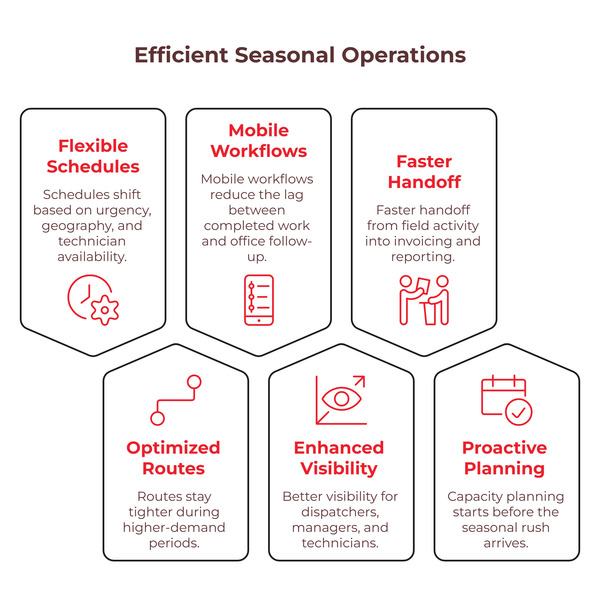
Strong seasonal operations are not built around one perfect month. They are built around a system that keeps adapting as demand changes.
That usually includes:
- Schedules that shift based on urgency, geography, and technician availability.
- Routes that stay tighter during higher-demand periods.
- Mobile workflows that reduce the lag between completed work and office follow-up.
- Better visibility for dispatchers, managers, and technicians.
- Faster handoff from field activity into invoicing and reporting.
- Capacity planning that begins before the seasonal rush.
The real goal is not simply survival during busy months. It is creating a service model that can keep moving without wasting time. That is why many businesses invest in tools to manage seasonal fluctuations in service demand before the next rush starts rather than after it begins.
What to Look for in Seasonal FSM Software
Not every platform is built for the same operational pressure. Seasonal service businesses usually need more than a basic dispatching tool, especially when demand shifts quickly across the year.
Look for:
- Flexible scheduling that can adjust to changing workloads and service volume
- Real-time dispatch updates so teams can respond faster when plans change
- Territory and route planning that reduces wasted travel during busy periods
- Mobile job completion tools that help field teams close out work faster
- Digital paperwork workflows that reduce delays between the visit and the office
- Better visibility across technicians, job status, and regional demand
- Capacity planning features that support seasonal staffing decisions
- Tools that work well for both HVAC and plumbing service operations
This is where seasonal staff scheduling software becomes especially valuable, because it helps managers handle changing workloads without creating more manual admin pressure. The same goes for HVAC route optimization software, which can support tighter planning during cooling or heating surges.
For plumbing teams, plumbing route optimization software can help reduce wasted time and improve response quality when schedules become harder to control.
Praxedo is built for that broader operational need, not just for putting jobs onto a board.
Conclusion
Every season brings a different kind of pressure, but revenue losses are rarely caused solely by weather. They usually come from extra minutes in traffic, reactive changes in dispatch, and paperwork that sits too long after a job is done. That is why strong operations matter just as much as strong demand.
At a practical level, businesses protect revenue by getting smarter about route optimization for HVAC and plumbing technicians and being more disciplined about what happens after the visit ends. The same is true for companies seriously considering how field service companies manage seasonal demand fluctuations to protect both service quality and cash flow.
Book a demo with Praxedo to see how your team can build a more controlled seasonal workflow without losing hours in traffic or on paperwork.
FAQs
1. Why is seasonal planning so important for HVAC and plumbing teams?
Seasonal demand changes can put pressure on routes, staffing, and service quality very quickly. That is why HVAC services seasonality scheduling management plays such an important role in protecting performance across the year.
2. How do strong service businesses handle changing demand across the year?
The best answer is not guesswork. It comes down to how field service companies manage seasonal demand fluctuations with better planning, better visibility, and faster operational response.
3. What causes revenue loss during busy months?
In many cases, it is not a shortage of work. It is the combination of poor routing, reactive dispatching, admin lag, and delayed billing after jobs are completed.
4. Why does routing matter so much in seasonal demand periods?
Because time on the road affects how much useful work gets done in a day. Better routing decisions protect technician capacity, reduce delays, and support a more stable customer experience.
5. Are software solutions useful even for smaller seasonal teams?
Yes. Smaller teams often feel demand swings more sharply, so better scheduling and field visibility can make a big difference without adding extra admin pressure.
6. What should companies improve first before the next busy season?
Start with visibility, routing discipline, and job closeout speed. Those improvements usually create immediate gains before bigger operational changes are made.

Our similar articles.
-
- customer experience
- fsm
- Service-first
- field service companies
- purpose-driven
Powered by Purpose: Building a Company Culture That Puts Service First
October 21, 2025