- Maintenance
- Recruiting
- Recruitment
- Recrutement
- Technician
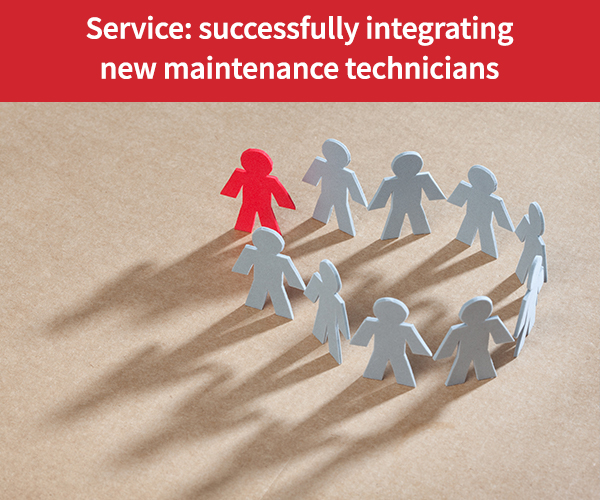
How To Successfully Integrate New Maintenance Technicians
Key Takeaways:
Here’s a quick overview of how to successfully integrate new maintenance technicians:
- Onboarding begins before day one; use the notice period to complete paperwork and prevent the new hire from going to a competitor.
- Get ready for day one, from protective clothing to mobile devices to system access; 85% of employees don’t have what they need on their first day.
- Use onboarding software to digitize the integration process and organize tasks, tours, and introductory meetings.
- Focus on human relations, personally welcome technicians, and have a mentor or workplace friend to ease them into the role.
- Evaluate both technical and behavioral skills early using a checklist to catch any issues before they become ingrained habits.
With service companies facing skills shortages, they must pay close attention to the way they integrate maintenance technicians into the company. This phase of the onboarding process starts before the new employee even arrives.
Despite ongoing health and economic crises, industry players must strengthen their teams and continue to recruit. This is particularly true in maintenance trades which suffer from skills shortages. Even in the midst of confinement, the maintenance technician profession had the lowest drop in job offers with a reduction of “only” 29%, according to a Randstad study.
In the current battle for talent, the challenge for employers is to attract and retain top candiates. The probationary period is often used as a test. Does the newcomer fit in? Does the technician quickly get on his feet? Join the team? Follow processes?
Even when the probationary period ends, employees may still leave the company. According to a study by Dares, the studies and statistics branch of the French Ministry of Labor, more than one-third of permanent employment contracts are broken before the end of the first year. That number rises to just over 45% among young graduates. The members generations Y and Z won’t hesitate to jump from one job to another if a job doesn’t meet their expectations for working conditions or management style.
These hiring errors are expensive. The costs associated with recruiting, training, loss of productivity due to the vacancy and the search for a replacement all increase the final tally. According to recruiting consultant, Jessica Ready, the cost of a failed recruitment in France could amount to more than 30,500 euros (about $47,000 CAD) for an employee hired at 2,200 euros (about $3,400 CAD) gross per month. High turnover also hurts the company brand.
How can employers build technician loyalty from day one?
The first few days in the company are crucial and employers must exercise care during the integration phase. This period is all the more sensitive in the maintenance profession because on-site technicians will soon be on the road. It’s important to not miss these first and rare opportunities to interact.
Gone are the days when a recruit arrived at a company with no advance preparations and no introductions to their manager and colleagues. It used to be that new employees were integrated during meetings and assignments. And it was usually up to the newcomer to take the first step on their own
Since then, companies have recognized the importance of the integration phase. In 2020, processes are more professional and include a number of key steps. Onboarding starts even before the new employee arrives at the company. A good technician typically already has a job and will need to give notice.
Prepare for day 1
Employers should take advantage of this period in two ways. They can save time by getting administrative tasks out of the way in advance. The recruit can electronically sign the employment contract and send the information needed for the HR file, including bank account details, proof of identify and proof of address.
This pre-boarding helps maintain the connection with the new employee. The momentum of the last interview, which may date back several weeks or even months, has subsided. The future employee may have received other offers. To avoid them signing with a competitor, they must feel like their arrival is anticipated.
To help new employees see themselves in their future positions, human resources departments should send them the latest company news, a welcome video message from the CEO, org charts so they can see themselves in the hierarchy, and even online training.
Maintenance companies that work at industrial sites can ask future technicians for their measurements so they can have protective clothing ready for them.
The same goes for mobile devices. The new employee may have a preference for a smartphone or a tablet. According to a study by French company, Invanti, 85% of employees don’t have all of the resources they need to work on their first day.
How can you digitize the technician onboarding process?
Naturally, preliminary exchanges are digital. SAP SuccessFactors, Workday, Cornerstone, Talentsoft, Talentia Software … all HR solution vendors market software features that are dedicated to onboarding and provide a much-needed improvement over the traditional welcome booklet.
With the lack of personal contact, the current health crisis will only accelerate integration using digital means. Software vendors such as HeyTeam are already showing they’re current with the times by offering new remote onboarding features such as virtual cafes and one-on-one meetings between the new employee and their manager.
Once the new recruit comes to the office, this type of solution can complete pre-boarding by creating a do-to-list that includes tours of support functions such as HR, accounting, IT and admin services to ensure the employee receives their access badge and insurance cards. The software can also automatically add meetings with key corporate players to the new employee’s calendar.
Maintain human relations
While digital technology allows a structured onboarding process, integrating new employees is above all about human relations and feelings. It’s in employers’ best interests to provide the best possible conditions for employees by creating an environment of trust.
Ideally, the employee’s manager welcomes them on day 1 and introduces them to their new colleagues. If the manager isn’t available, appoint a mentor or a workplace friend who can lead the newcomer through these conversations. If you’re assigning a workplace friend, it’s better to choose someone who is about the same age and at about the same level in the organization to make conversations easier.
The team leader takes over in the weeks that follow, carefully monitoring the new technician’s behavior without putting too much pressure on them. The idea is to make sure the new employee has the right skills for the job.
Evaluate technical and behavioral skills
While technical skills are easy to verify, behavioral skills such as interpersonal skills, the ability to adapt to any situation and to manage stress, are more complex to assess.
To help with these assessments, create an evaluation checklist. Does the new employee follow safety instructions? Does he have a good rapport with customers? Industry manuals can provide good tips for writing this type of checklist.
The key is to quickly identify even the slightest problem to ensure the situation doesn’t continue unaddressed. Habits, good or bad, are hard to break. It’s also important to establish an ongoing dialogue to avoid misunderstandings.
Finally, companies that are integrating a large number of technicians at the same time can arrange team building activities such as escape room games or sports events to create team spirit and group identity.
Conclusion
Onboarding a new maintenance tech isn’t a one-day process, it starts the day they accept the job offer and lasts long after they start working on the road. With proper preparation, digital structure, real human interaction and transparent skills assessment, you transform a nervous new hire into a long-term team member. That first impression is one of the most valuable investments you can make in an industry that is plagued by talent shortages.
From the first day, Praxedo helps new technicians get up to speed with an intuitive, mobile-first app that is easy to learn and use, reducing ramp-up time and boosting confidence in the field. Request a demo to see how it eases onboarding.
FAQs:
1. Why is onboarding maintenance technicians so important?
Retention is essential due to skills shortages, and poor onboarding leads to high, expensive turnover rates; more than a third of contracts end within the first year.
2. When should the onboarding process begin?
It should start before the new employee arrives, during the notice period, to get paperwork done and to keep them interested so they don’t take a job elsewhere.
3. How can employers prepare for a technician’s first day?
Prepare for administrative duties and have equipment, protective clothing, a mobile device, and system access, as many employees will not have these on day one.
4. How does digitizing onboarding help?
Unlike traditional welcome booklets, onboarding software organizes the process with task lists, department tours, and auto-scheduled meetings.
5. Why do human relations matter in technician onboarding?
Integration is all about trust and belonging, and a personal welcome and assigned mentor help new technicians feel part of the team before they go out on their own.
6. How should employers evaluate new technicians?
Implement an evaluation checklist that includes technical skills and behavioral characteristics such as safety compliance and customer rapport to identify problems early.

Our similar articles.
-
- Software
- Field Service Management
- Technician
- Work orders
How to choose the right field service management software with a comprehensive buyer guide
December 22, 2020
-
- Customer Satisfaction
- Optimization
- Technician
- Technicien
Field technicians: what you can expect from Generation Y
July 7, 2021
-
- Field Service Management
- Mobility
- Technician
- Work Order Management
Benefits of mobile apps for work order management
May 7, 2018